
Planning for Uncertainty: The Value of Global Manufacturing for Material Handling Equipment
How regional production within a global footprint supports operational resilience, cost predictability, and long-term planning
- Insights
- February 12, 2026
Activated Roller Belt S7000
Uncertainty has become a defining feature of global supply chains. For material handling equipment buyers, it shows up in familiar ways: pricing changes late in the purchasing process, component sources have shifting constraints, and project timelines are harder to confirm.
None of this is tied to a single policy, event, or market condition. It’s the cumulative effect of how interconnected modern equipment systems have become, and how many variables now influence cost, availability, and delivery.
As a result, Procurement and Operations teams may ask and prioritize different questions than they did a few years ago: Where is the equipment manufactured? How is it manufactured? Will this investment withstand change?
Here are three perspectives on global manufacturing footprints, with regional production worth considering in long-term planning.
Operational Resilience in Today’s Supply Chain
Material handling systems depend on a wide range of components, such as fabricated metal structures, electronics, and pneumatics. When these components cross multiple borders, even small hiccups can suddenly lead to missed due dates and stalled projects.
In fact, it’s often the little things—not just major failures—that really test how resilient your operations are over time. A delayed component, constrained supplier, or routing change can add weeks of uncertainty to a project schedule. When manufacturing is centralized or there aren’t a lot of sourcing options, these problems tend to pile up.
Small, recurring disruptions highlight the importance of risk distribution across the supply chain. Operational efficiency alone is no longer sufficient when sourcing conditions change.
A global manufacturing footprint with regional production is one way to introduce flexibility. This allows production to align more closely with deployment, enables sourcing strategies to shift as needed, and reduces the chance of a single point of failure.
Insight: Today, operational resilience means having backup plans. For equipment buyers, this flexibility keeps projects on track when circumstances change.
Cost Predictability and Total Cost of Ownership
Equipment cost changes rarely appear all at once. More often, they surface through a series of smaller changes that undermine planning confidence, such as:
- Price adjustment late in procurement
- Component cost shifts after a design is finalized
- Changes in freight cost or delivery timelines
In complex equipment projects, these late-stage changes have a major effect. Suddenly, budgets reopen, timelines stretch as numbers are recalculated, and teams must revisit decisions they believed were settled.
Taken together, it all adds up and changes how equipment investments are evaluated. Upfront price still matters, but it's increasingly weighed against a system's lifetime maintenance. Having confidence in your plan has become as important as the number itself.
Things like how easy it is to get maintenance, spare parts availability, service response times, shipping distance, and exposure to cross-border fees accumulate over time. The harder these are to control, the trickier it is to manage the total cost of ownership—even when the upfront price is attractive.
A global manufacturing footprint with regional production changes where cost risk enters a project. By sourcing and producing closer to where systems are deployed, fewer variables remain unresolved once projects move forward and planning becomes less reactive during implementation.
Insight: Late-stage price changes can cause more planning disruption that outweighs the benefit of a lower upfront price. For equipment buyers, predictable costs mean clearer budgets, stronger ROI, and smoother implementation.
Planning with Global Operations in Mind
When plans don't rely on a single location or sourcing path, systems are easier to adapt, extend, or replicate across regions. Thinking about global operations early helps reduce constraints before they show up later.
When manufacturing, inventory, and support are located closer to customers across regions, equipment buyers can expect:
- Shorter lead times
- Faster recovery
- Consistent system deployment across sites
At Intralox, high-demand components are assembled and stocked closer to customers. This reduces your fulfillment times and makes it easier to restore systems quickly when timing matters most. Over time, this regional presence supports your expansion into new markets or adjusting capacity without redesigns, new approvals, or long sourcing cycles.
Insight: Global manufacturing can shape how reliable your plans will be from the start.
Looking Ahead
Uncertainty is unavoidable when material handling teams are planning. The goal isn't to eliminate it, but to plan in a way that still works when it occurs. Regional production within a global manufacturing footprint can help limit disruptions that affect operations, reduce variability that changes total cost of ownership, and preserve planning continuity as businesses grow.
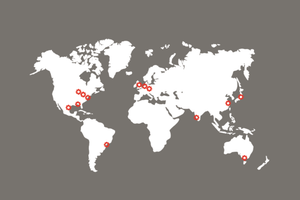
Our Global ReachShorter Routes, Faster Recovery
Explore how our global manufacturing footprint supports faster recovery and reduced downtime.